
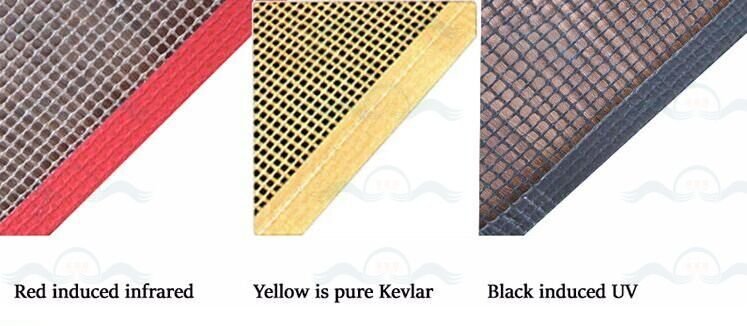
- Edge Reinforcement Options
| Edge Type | Material | Description | Advantages | Disadvantages |
|---|---|---|---|---|
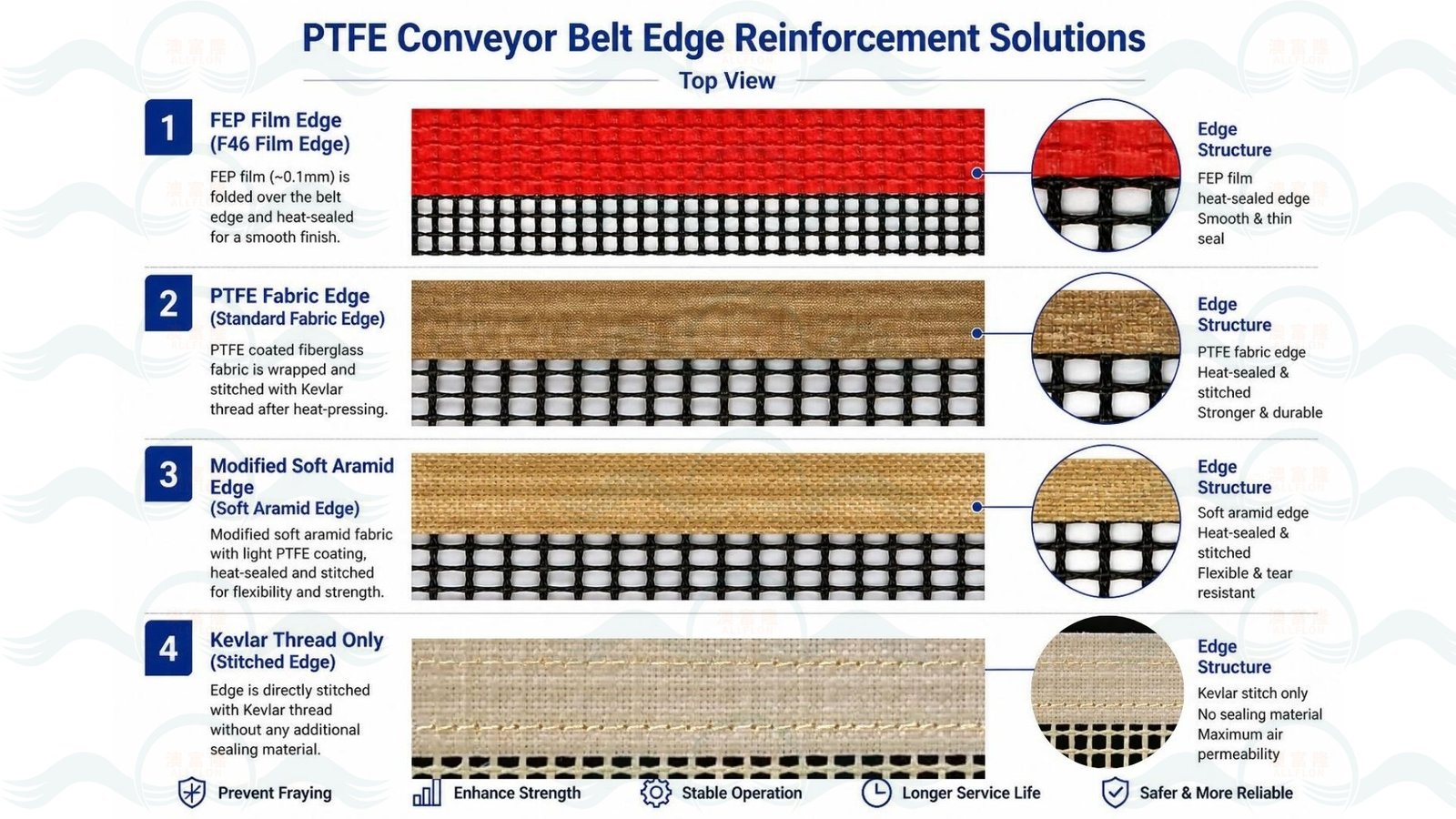
| FEP Film Edge (F46 Sealing) | FEP film (~0.1 mm), available in red / white / black | Folded FEP film is thermally bonded over the belt edge, forming a smooth, sealed edge without visible stitching. | - Soft and flexible - Ideal for small rollers (≤80 mm) - Smooth, non-stick surface - Good sealing against dust and moisture - Clean appearance, cost-effective | - Limited wear resistance - Moderate tear strength - Not suitable for high tension or misalignment - May become brittle above 220°C |
| PTFE Fabric Edge (Standard Sealing) | PTFE-coated fiberglass fabric (0.1 / 0.2 mm) | Fabric strips are wrapped, heat-pressed, and stitched with Kevlar thread for reinforced edge protection. | - High strength and durability - Excellent wear and tear resistance - Temperature range: -70°C to 260°C - Resistant to chemicals and aging - Suitable for continuous operation | - Stiffer, less flexible - Not suitable for small rollers (≤100 mm) - Rough surface may reduce non-stick performance - Thicker edge increases bending resistance |
| Soft Kevlar Edge (Advanced Aramid Edge) | Modified soft aramid (Kevlar) fabric with light PTFE coating | High-elastic aramid fabric is softened and combined with heat bonding and stitching to balance strength and flexibility. | - High strength with improved flexibility - Excellent resistance to tearing and edge damage - Suitable for repeated bending and medium-small rollers - Good wear resistance and long lifespan | - Higher cost - Moderate non-stick performance - May attract fine particles - Slight strength reduction above 200°C over time |
| Kevlar Stitch Edge (Unsealed Edge) | Kevlar thread only (no sealing material) | Belt edge is directly stitched (single/double), leaving the mesh fully open. | - Maximum air permeability - Extremely flexible (≤50 mm rollers) - Lowest cost - Easy maintenance and repair | - Weakest edge protection - Prone to fraying and wear - Not suitable for high tension - No sealing against dust or liquids |